

It took a four-decade runway to get off the ground
Mon, 31st Aug 2026
The Western Sydney International Airport (WSI) is a major infrastructure project about 50 kilometres west of the CBD of New South Wales' principal city. Construction began in September 2018, with cargo operations underway six months ahead of schedule in July this year and the first passenger flights expected on time next month.
WSI will deliver international and domestic passenger services from opening day on October 25, 2026, when Jetstar begins domestic passenger services with a flight to the Gold Coast. Air New Zealand jets in a day later to kick offinternational passenger services. Qantas, Singapore Airlines and Vietjet are also committed to WSI international passenger services.
Support services
Concern remains about the current availability of supporting infrastructure, including a dearth of hotel beds in the district.
Supply is critically constrained with just 904 rooms across four projects currently under construction and less than 1000new beds since 2021, says CBRE Australia
"Even if every proposed and approved project is delivered, Western Sydney would still only meet one-third of long-term room demand," CBRE says.
The $11 billion metro railway linking central Sydney to the WSI, jointly funded by the Australian and NSW governments, is now not expected to be completed until April 2027.
When operational, it will take only 15 minutes from WSI to St Marys where passengers can pick up the Sydney Metro. The 23-kilometre line links St Marys metro station to the WSI Business Precinct and the airport through Bradfield. Capacity is expected to be 7740 passengers per hour in each direction.
Free replacement bus services will run between the airport and St Marys until the metro opens
On the bright side, the toll-free M12 Motorway connects WSI seamlessly to Sydney's motorway network. Recent upgrades to the M7/M12 interchange have introduced new bridges, additional lanes and improved connections.
Smooth operation
Construction of the project itself was pretty much trouble free and on time, a major relief after almost four decades of political bickering.
Construction of WSI commenced in September 2018, when major earthworks began at the 1780-hectare site, in what would become Australia's largest civil earthmoving project outside of the mining sector.
By June last year construction of the airport's 3.7-kilometre runway and the Nancy-Bird Walton Terminal were complete and the focus turned to testing the airport's systems ahead of the opening to passenger traffic 13 months later.
Cargo and flying freight
Stage 1 Cargo Works involved the design and construction of WSI's dedicated freight and cargo precinct. Separate from the passenger terminal, the cargo precinct was planned to enable early activation and to support freight, logistics and supply chain activity across the region.
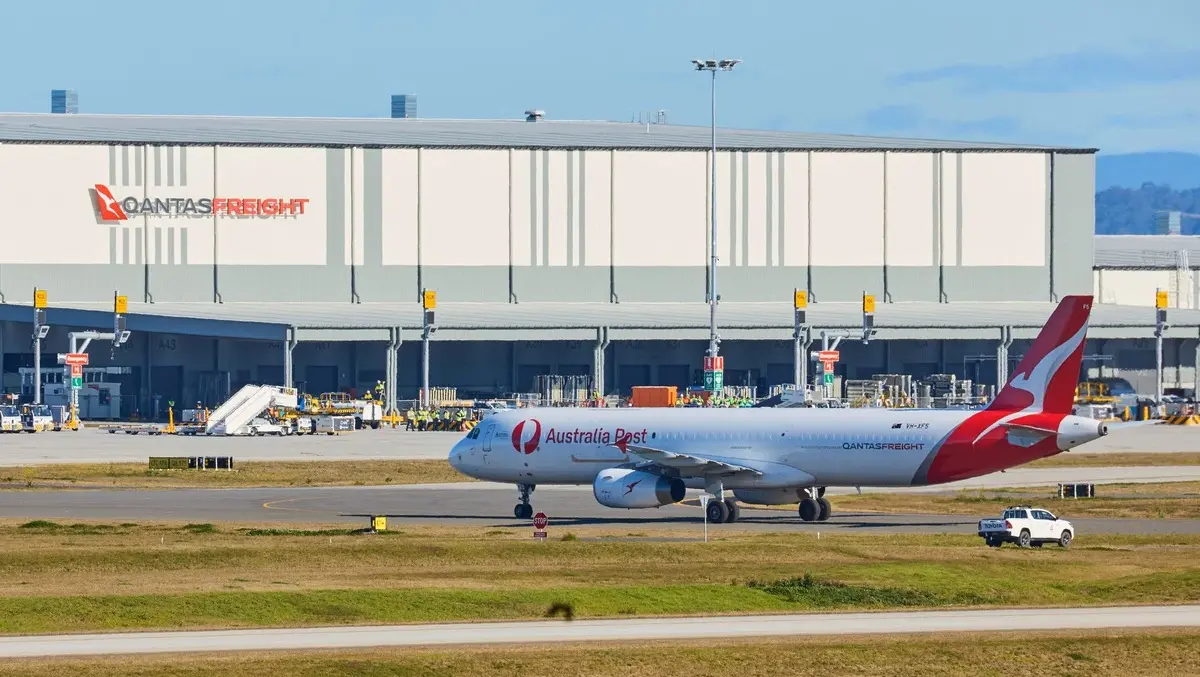
It was completed ahead of schedule and within budget, enabling WSI to commence cargo and freight operationsearly. Qantas Freight obliged on July 27 with more than 160,000 Australia Post parcels moving through the new facility in its first 24 hours.
The cargo precinct is capable of processing up to 270,000 tonnes of air freight annually in its initial phase The 24,000-square-metre Qantas Freight Terminal alone is designed to handle more than 850 tonnes of cargo each week.
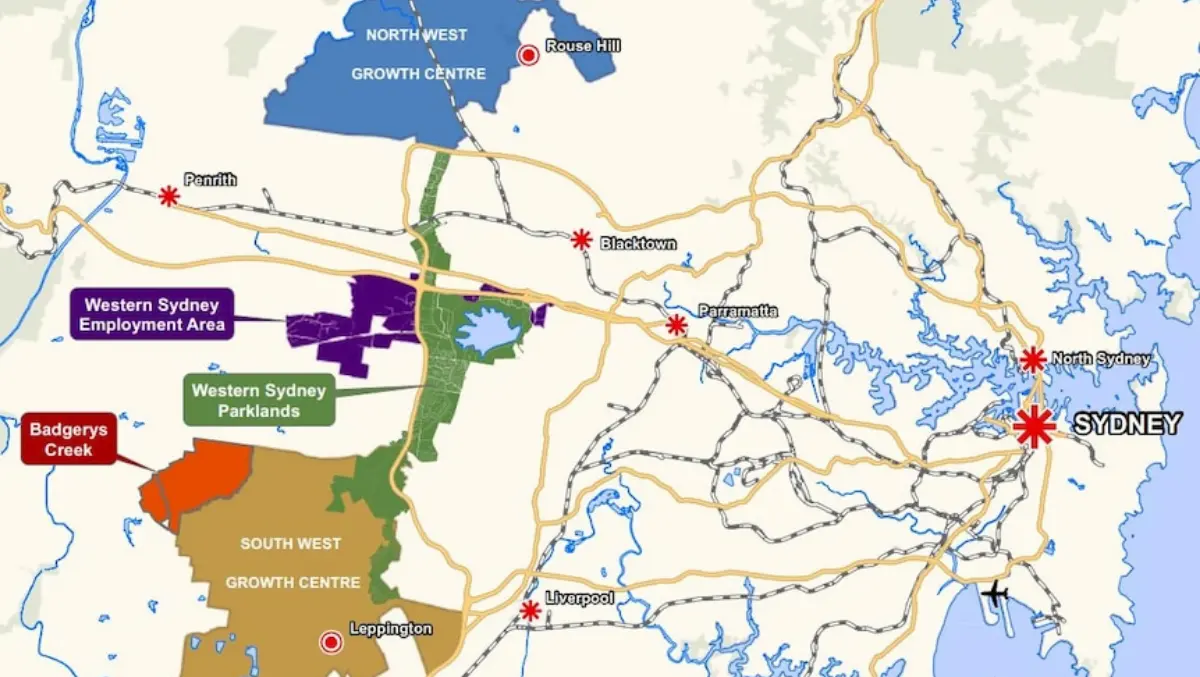
With demand for flights set to double over the next 20 yearsin Australia, the curfew-free airport will help Sydney meet its growing aviation needs and provide a source of jobs and economic growth in Western Sydney through the designated North-West and South-West growth areas (see map).
WSI is looking to be the principal gateway for international exports from throughout Australia.
Bio-diversity
A Biodiversity Offset Delivery Plan (BODP) outlines measures for offsetting significant impacts on threatened and endangered ecosystems and species that were present on the WSI site prior to the commencement of construction activities.
Central components of the BODP include the restoration and management of at least 900 hectares of native vegetation and the purchase of BioBanking credits through the NSW Biodiversity Offsets Scheme.
A contribution to the Greening Australia Cumberland Seed Hub programme to develop a reliable source of native seed and the acquisition of suitable parcels of land to be managed by local conservation groups are also required.
Who is in charge?
WSI is being delivered through the government-owned WSA Co Ltd (WSA) which was formally established in August 2017 to deliver and operate the airport. It is governed by an independent board.
While WSA is responsible for delivering and operating the airport, the government will continue its regulatory oversight of the project through the Department of Infrastructure, Transport and Regional Development to "ensure compliance with conditions in the Airport Plan."
Getting the project ready to fly
The New South Wales state and Australia's central governments began acquiring land at Badgerys Creek for Sydney's second airport in the mid-1980s. Planning restrictions were put in place to prevent residential development in the areas surrounding the proposed airport.
Good planning you might think, but it still took more than 30 years of political bickering and a false start in the early 1990suntil the project began to show signs of life.
Enthusiasm for WSI had waned after the third runway at Sydney's Kingsford Smith Airport took up the international cargo and passenger slack when it opened six months ahead of schedule and under budget at the end of 1994.
Noisy debates
But the elephant in the room for WSI was always going to be about noise from a 24-hour-a-day airport. The prospect of increased aircraft noise over Sydney's inner-west and North Shore set off protests across the city. A newly formed No Aircraft Noise Party caused considerable upset in the 1995 state election.
In 2000, then Prime Minister John Howard scrapped plans for the "Badgerys Creek airport" altogether but retained ownership of the land. "All of our advice says that Sydney does not need a second airport in the foreseeable future," he said at the time.
Unity emerges
It wasn't until a joint state and federal report released in March 2012 found Sydney would need a second airport by 2030, and listed Badgerys Creek and Wilton as potential sites.
"By the year 2035, the cost to the economy will be $6 billion and by 2060 it will be 10 times that," said then federal infrastructure minister Anthony Albanese.
The momentum for Badgerys Creek continued after the September 2013 federal election, when newly elected Prime Minister Tony Abbott foreshadowed a decision would be made early in the new government's first term.
Support begins to mushroom
The Western Sydney Regional Organisation of Councils reversed 30 years of opposition and voted to back the plan.
"If Sydney is to be a city that is able to compete internationally, then it will have to have airport services that are available 24 hours," then deputy prime minister Warren Truss said.
NSW Opposition Leader John Robertson did a policy U-turn and wrote to Abbott offering his support for the project. "I've spent time listening and talking to people in the west and I'll support the airport as long as it's a fair deal for western Sydney," he said.
Shortly after, when a report found Wilton had considerable subsidence problems that would be too expensive to overcome, Badgerys Creek got the nod to become the Western Sydney International Airport.