


US builders are shifting more multifamily projects to cold-formed steel framing as higher insurance costs and tighter labour supply reshape project economics, industry participants say.
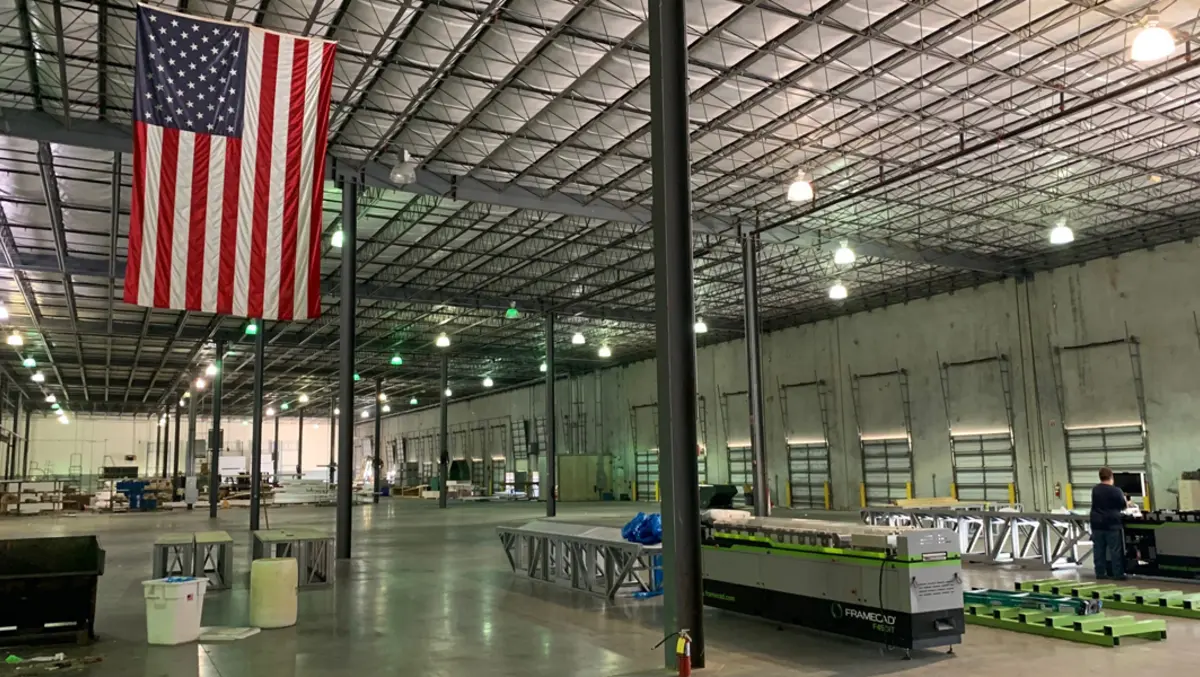
One example is Intellisteel, a US fabricator that uses FRAMECAD software and manufacturing systems. A Michigan project that initially met resistance from a general contractor led that contractor to complete nine more projects with Intellisteel after seeing the schedule and cost results.
Stanley Adwell, Chief Executive Officer and Co-Founder of Intellisteel, said the response went beyond repeat work from one contractor. Within five months of the building going up, the project had generated 22 unsolicited follow-on inquiries from contractors, owners and developers across the region, he said.
That demand has prompted Intellisteel to set up a factory in Michigan, Adwell said. The original project was about 1,200 miles from the company's home base.
The shift reflects mounting pressure on project economics across parts of the US residential and commercial building market. Developers and contractors face higher premiums on wood-framed buildings while also struggling to find enough skilled workers for site-based framing.
That is changing the sales process for steel framing suppliers, according to companies in the sector. What often required lengthy technical persuasion is increasingly moving through referrals and repeat orders after contractors and developers assess outcomes on completed or active jobs.
Insurance pressure
Insurance costs appear to be one of the clearest drivers of the shift. Adwell said some owners now see insurance as the deciding factor, rather than framing cost alone.
"I've had owners tell me plainly that they are choosing cold-formed steel for the insurance outcome as much as the building outcome," Adwell said.
He said builder's risk insurance can be 45 to 60 per cent cheaper on steel-framed projects, with additional savings on general liability once a building is complete. Those savings can alter project viability, particularly in segments where margins are already under strain.
Labour shortages are reinforcing the trend. Builders are under pressure to reduce the amount of specialist labour needed at the framing stage and to avoid delays caused by scarce site trades.
Cold-formed steel systems shift more work upstream because the building is designed, detailed and manufactured before material reaches the site. More decisions are resolved before installation begins, leaving less to adjust in the field.
Sector demand
Adwell said Intellisteel is seeing the strongest demand in low- to mid-rise multifamily housing, assisted living, hotels, student housing and build-to-rent communities. In several of those categories, non-combustible construction rules and insurance pressure are strengthening the case for steel framing.
FRAMECAD, the New Zealand-founded company whose systems Intellisteel uses, is seeing similar patterns across its US customer base. The group develops the software and manufacturing systems used to engineer and detail steel framing before production.
Ian Wright, Head of Product at FRAMECAD, said demand is rising where developers and contractors want more predictable schedules and fewer site problems. "We're seeing growing demand in projects where developers and contractors want more predictable schedules, less site rework and a clearer path through labor and insurance constraints," Wright said.
He said the issue extends beyond the choice of one material over another. "It's bigger than just a swap to a new material. We see the industry moving toward industrialized construction, where more decisions are made earlier, more components are manufactured in controlled settings and fewer problems are left to be solved on site. In that model, steel framing is being judged not only on structural performance, but on whether it helps projects stay financeable and buildable under current market conditions," Wright said.
The comments point to a broader shift in how construction methods are being assessed. Rather than focusing only on structural or material comparisons, owners and contractors are weighing whether a system helps them secure insurance, manage labour risk and keep projects on schedule.
FRAMECAD said its experience in Australia shows how quickly adoption can build once contractors and developers see a scheme completed under real project conditions. Its technology is used in about one in 10 new homes there.
Wright said the US market is following a different path, but proof on one project can change subsequent discussions. "The US market is different, but once one project proves the method in real conditions, the next conversations become easier," Wright said.
He added: "Cold-formed steel is no longer being adopted only because it wins a technical argument. It is gaining ground because it helps solve commercial problems that conventional delivery models are finding harder to manage."