

UMOE ships first China-made gas containers to Australia
Tue, 17th Nov 2026 (Today)
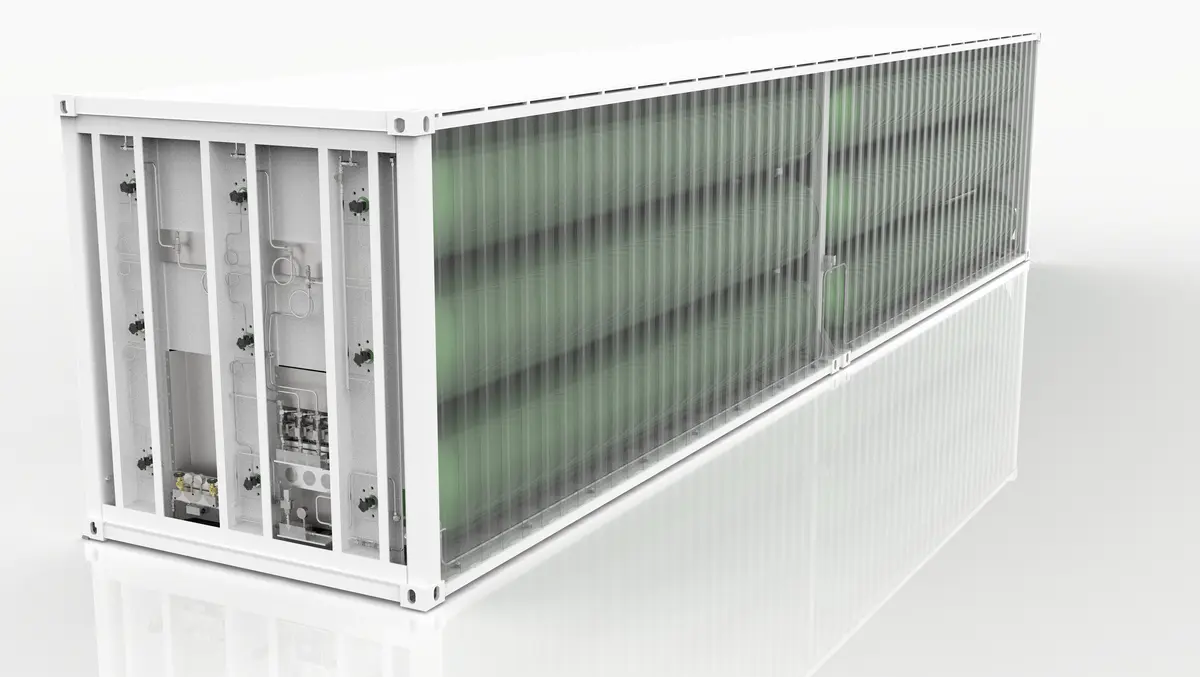
UMOE Advanced Composites has shipped five Multi Element Gas Containers from its Jiaxing plant in China to the Hiringa Sundown joint venture in Australia. It is the company's first international commercial MEGC shipment from the facility.
The containers include what the company described as the first Type IV glass-fibre pressure cylinders manufactured in China. They are set to support the Good Earth Green Hydrogen and Ammonia project in New South Wales.
Two of the units are 20-foot MEGCs and three are 40-foot MEGCs. The Australian project is being developed by Hiringa Sundown, a joint venture between Hiringa Energy and Sundown Pastoral Company, to use green hydrogen and low-carbon ammonia in agriculture and transport.
For UMOE Advanced Composites, the order marks a commercial step in a manufacturing strategy built around production in both Norway and China. The Jiaxing site spans 12,000 square metres and has annual capacity of up to 20,000 composite cylinders.
The shipment also forms part of the certification process for the group's Type IV high-pressure glass-fibre cylinders for the Chinese domestic market. UMOE Advanced Composites says it has more than 12,000 cylinders in operation across more than 40 countries.
Lars Erik Lunøe, Chief Executive Officer of UMOE Advanced Composites, said the delivery shows the company has moved beyond plant ramp-up in China and into supplying overseas customers.
"This shipment to Australia is an important milestone in UAC's global strategy. The investment in Jiaxing was not just about increasing capacity, but about building a manufacturing platform that combines our established Norwegian technology with China's manufacturing scale and supply-chain strengths. This gives UAC greater flexibility, a more competitive cost base and a stronger global footprint as we expand internationally. The Hiringa shipment demonstrates that our dual-manufacturing strategy is now translating into commercial delivery for international customers," said Lars Erik Lunøe, Chief Executive Officer of UMOE Advanced Composites.
He also outlined the company's view of the commercial case for its storage systems.
"For customers, the value lies in the economics of the technology itself. Our lightweight glass-fibre Type IV solutions provide a cost-effective alternative for high-pressure gas storage and transportation, combining high payload capacity with a highly competitive total cost of ownership," said Lunøe.
Project demand
The GEGHA project is designed to produce up to 4,500 tonnes of low-carbon ammonia a year. Its MEGCs will form part of the project's hydrogen storage and logistics infrastructure.
The shipment also builds on an existing relationship between UMOE Advanced Composites and Hiringa Energy. The company previously supplied Norway-made Type IV MEGCs for Hiringa Energy's first four operating hydrogen refuelling stations in New Zealand.
That earlier work gave Hiringa operational experience with the equipment before the Australian order. Alistair Tippett, Head of Projects & Engineering at Hiringa Energy, said storage and transport remain central issues for hydrogen developments.
"Reliable, cost-effective storage and transport are critical to making hydrogen projects work at scale," said Alistair Tippett, Head of Projects & Engineering at Hiringa Energy.
"We have already seen UAC's MEGCs perform in our New Zealand hydrogen refuelling network, and this delivery builds on that experience as we develop the GEGHA project in Australia. Having access to proven Type IV technology together with increased manufacturing capacity in Asia gives us greater flexibility as we scale hydrogen infrastructure in the region," said Tippett.
Storage economics
UMOE Advanced Composites says its 40-foot MEGCs can store up to 720kg of hydrogen. It argues that a higher payload per journey can lower transport costs for hydrogen distribution, which remains a commercial constraint for many projects in the sector.
Type IV cylinders use composite materials rather than conventional all-metal construction, reducing weight while allowing gas to be stored at high pressure. That has made them a focus for hydrogen developers looking to move fuel between production sites, storage hubs and refuelling infrastructure.
The Australian delivery comes as suppliers across the hydrogen value chain seek manufacturing scale in Asia while retaining access to established engineering expertise in Europe. For UMOE Advanced Composites, the shipment is an early test of whether that model can win export business as hydrogen projects move from pilot stage to regular equipment orders.
The company now operates manufacturing facilities in Norway and China and supplies storage and transport products for hydrogen, biomethane, CNG and other compressed gases.