

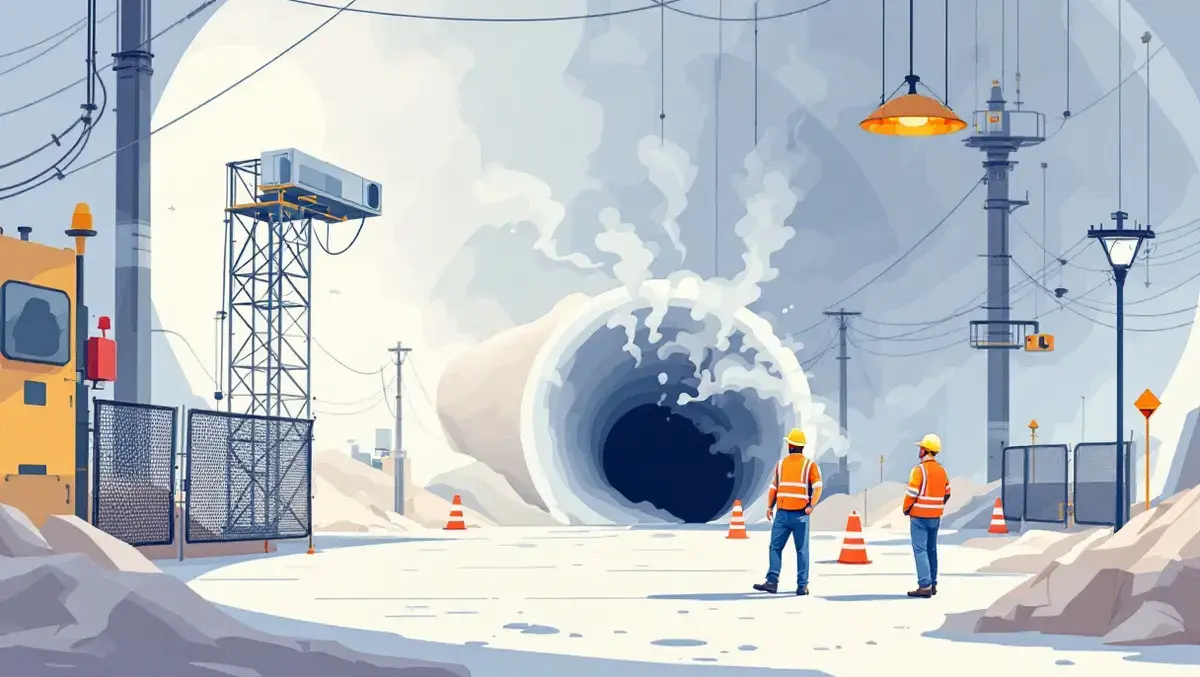
NSW tightens tunnel code to curb silica exposure
Tue, 24th Nov 2026 (Today)
New South Wales has introduced a legally binding Tunnels and Shafts Code of Practise for tunnel and shaft construction work, updating rules that had not been revised for 20 years.
The code sets minimum standards for businesses involved in tunnelling and shaft construction and brings them under the state's work health and safety framework. Companies that fail to comply could face penalties under the Work Health and Safety Act.
It is intended to strengthen protection for workers exposed to hazardous dust, including respirable crystalline silica, which can cause silicosis and other dust diseases. The guidance covers risk assessment, engineering controls, ventilation, air monitoring, and the review of control measures.
Tunnelling is now a major part of the state's infrastructure pipeline, but excavation work can expose workers to silica found in rock and other materials. The revised code also reflects modern tunnel-boring and excavation methods, as well as psychosocial risks linked to tunnel work, including remote working.
The change follows recommendations from the NSW parliamentary review of the Dust Diseases Scheme, which called for stronger safeguards for workers exposed to respirable crystalline silica during tunnelling. It replaces the Tunnels Under Construction Code of Practise introduced in 2006.
Dust controls
Thousands of workers across NSW are expected to be covered by the strengthened framework. The code sets out the precautions employers must take on tunnel and shaft projects and gives inspectors a benchmark for assessing site practices.
SafeWork NSW has already carried out a statewide compliance operation following the code's introduction. Inspectors visited three tunnel projects between late September and early November and issued five improvement notices.
During those visits, inspectors found contractors were broadly aware of the new requirements and were carrying out gap analyses of their work health and safety systems and procedures. The code is therefore likely to serve not only as an enforcement tool but also as an operational checklist for large contractors and subcontractors.
More broadly, SafeWork NSW has increased its activity on silica exposure across multiple sectors. Since 1 July 2024, inspectors have completed more than 4,156 workplace visits related to silica risks and issued 2,063 improvement notices, 520 prohibition notices, and 73 penalty notices.
Those figures show how central silica enforcement has become for the regulator, particularly in construction and manufacturing. The issue has drawn increasing scrutiny as cases of silicosis and other dust-related diseases have emerged among workers exposed to fine airborne particles over long periods.
Wider measures
The tunnel code forms part of a broader state response to silica exposure. NSW has supported the national ban on engineered stone benchtops, panels, and slabs containing 1 per cent or more crystalline silica, including a ban on imports.
The government has also established a Tunnelling Dust Safety Taskforce with representatives from government, medicine, industry, and unions. Its role is to advise on the prevention and management of silica and other dust-related disease risks associated with tunnelling projects.
Other measures include a dedicated silica unit within SafeWork NSW, with a specialised compliance team focused on strengthened regulations and high-risk processing activities. The state has also committed AUD $5 million over three years to silicosis research and a patient support programme administered jointly by icare and the Dust Diseases Board through the Asbestos and Dust Diseases Research Institute.
A further AUD $2.5 million has gone to a mobile lung screening service for workers at risk of workplace dust disease, including mesothelioma, asbestosis, and silicosis. The state has also created a Silica Worker Register to support health monitoring for workers involved in high-risk processing of crystalline silica substances.
As at 30 September, 20,004 workers from 922 businesses were on the register, with most employed in construction and manufacturing. The data gives authorities a clearer picture of the size of the exposed workforce and the industries where monitoring needs are greatest.
Minister for Work Health and Safety Sophie Cotsis said the revised code was designed to prevent workers on major infrastructure projects from suffering long-term illness because of their jobs.
"Some of this country's largest infrastructure projects can also be dangerous to work on, and we want to make sure the workers building these major roads and infrastructure are remembered for these incredible projects and not because they contracted a deadly disease," Cotsis said.
"This is the first time in 20 years the tunnelling code of practice has been updated, and it is now a legally enforceable minimum standard that must be complied with.
"Silicosis is a preventable disease, and the Minns Labour Government is committed to doing everything we can to minimise exposure to silica, from banning engineered stone to introducing this legally binding code of practice."
Minister for Roads and Regional Transport Jenny Aitchison linked the issue to the state's heavy transport construction programme.
"Workers building the tunnels and transport infrastructure that our state relies on should never have to put their long-term health at risk while doing their jobs," Aitchison said.
"We know the consequences of silica exposure can be devastating, not just for workers but for their families and loved ones. That's why the Minns Labour Government is acting.
"This new Code of Practise sets a stronger standard for managing dangerous dust exposure by giving employers clear guidance on the steps they must take to protect workers from harmful substances like silica.
"Our government's message to industry is clear. Protecting workers' health is not optional. We expect businesses to take their responsibilities seriously and make sure every worker gets home safe to their families."
SafeWork Commissioner Janet Schorer said the code formed part of a broader regulatory effort.
"Every worker has the right to come home healthy at the end of the working day. The release of this new Code of Practise is an important step in strengthening protections for workers in the tunnelling industry," Schorer said.
"Silicosis is a devastating and preventable disease. We must continue to take action to reduce workers' exposure to silica dust.
"This Code is one part of SafeWork NSW's broader approach to tackling silicosis. We are also working with industry through the Tunnelling Dust Safety Taskforce to drive stronger prevention and control of hazardous dust across the state.
"The new Code provides practical, contemporary guidance to help businesses identify and control risks. Developed in consultation with industry, unions, and subject matter experts, it reflects the realities of modern tunnelling and supports the industry to put effective controls in place.
"SafeWork NSW encourages businesses, workers, and other duty holders involved in tunnel and shaft construction to familiarise themselves with the new Code and apply its guidance to their work."