

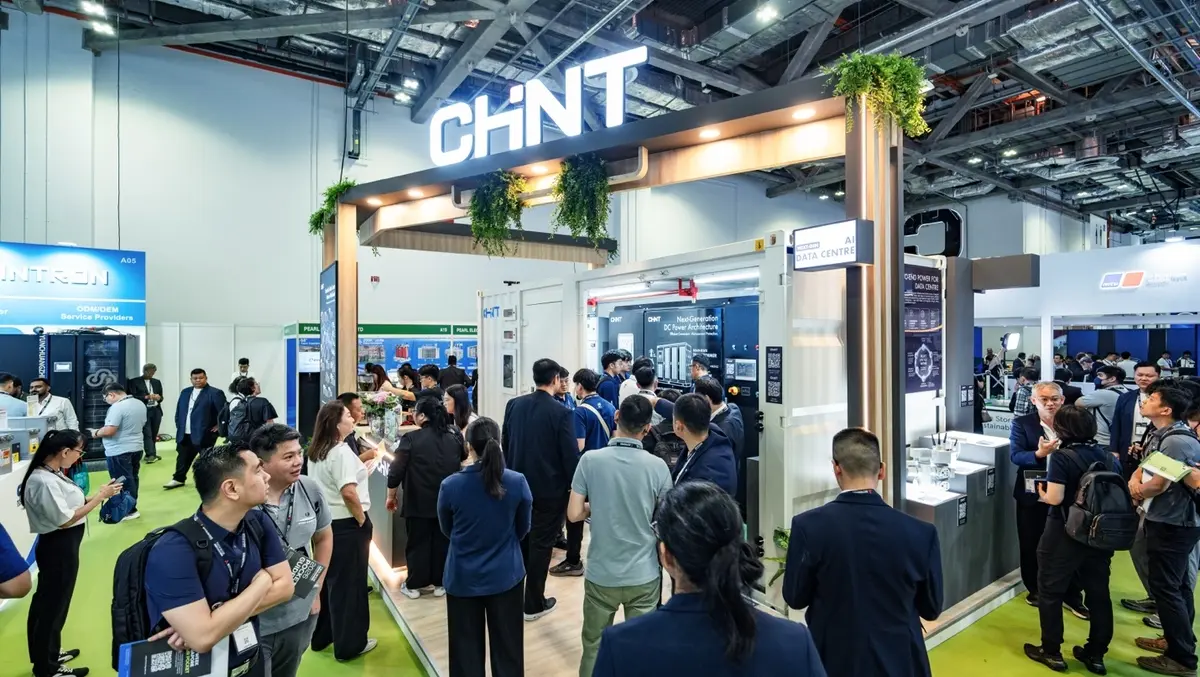
CHINT unveils factory-built Power Pod for Asia data centres
Sat, 17th Oct 2026 (Today)
CHINT has introduced its factory-built Power Pod for the Asian market and given an early preview of its Solid-State Transformer technology.
The launch comes as data centre operators in Asia-Pacific face growing pressure to secure electrical equipment for AI-led expansion.
The Power Pod is a containerised system that combines switchgear, transformer and circuit protection in one enclosed unit for outdoor installation. It also includes cooling, fire protection, lighting and security, and is assembled and tested before shipment.
CHINT said the product can cut on-site installation time by up to 60% compared with field-built systems, with deployment taking as little as one week after the unit reaches a site.
Configurations range from 500kW to 4,000kW, which CHINT said is enough to support anything from a single high-density AI rack to roughly a full data hall.
The company is positioning the product as a response to a problem that has become more acute as AI workloads increase electricity demand in data centres. Operators are not only expanding computing capacity, but also trying to secure and integrate power infrastructure quickly enough to keep projects on schedule.
CHINT said most of the Power Pod's core equipment is manufactured and tested in-house rather than sourced from several vendors and assembled on site. The equipment is validated at its 4MW in-house testing facility before shipment.
The approach is intended to reduce supplier handoffs and leave one manufacturer responsible for production, integration and testing. CHINT said this can shorten the gap between equipment delivery and energising a data hall.
Lead times for key components remain a challenge across the sector. Large power transformers, among the longest-lead items in a new data centre build, are taking roughly 128 weeks to deliver, according to CHINT.
According to figures cited by the company from Cushman & Wakefield's Data Centre Advisory Group, Asia-Pacific data centre capacity is projected to increase 2.4 times, with 13.8GW of operational capacity and a further 19.4GW under construction or planned.
Paul Lee, APAC Strategic Segment Director at CHINT, said the issue is no longer simply adding more servers.
"Power is now the hardest part of building AI infrastructure," said Paul Lee, APAC Strategic Segment Director at CHINT.
"Operators don't need another pile of components to integrate, wire and commission on site - they need a single, factory-validated power block they can install and switch on. That's the problem our Power Pod is built to solve," Lee said.
DC architecture
Alongside the Power Pod, CHINT outlined its Solid-State Transformer, or SST, as part of a direct current architecture for data centres. The system uses power electronics and high-frequency components to convert medium-voltage alternating current from the grid directly into 800V direct current for AI data centre environments, according to the company.
CHINT said the SST has a stated peak efficiency of up to 98.5% and a power factor of at least 0.99. It added that power can move in both directions through the system.
The company described the product as a building block for future high-voltage direct current data centre designs. The aim is to reduce the number of conversion stages between the grid and the IT rack, cutting associated energy losses.
The announcement reflects a broader shift in data centre design as operators seek to manage denser computing loads and the electricity systems that support them. Power distribution equipment, grid connection and final distribution at the rack are drawing more scrutiny as developers try to avoid delays in bringing facilities online.
CHINT said its approach spans grid connection, medium-voltage distribution and final distribution at the IT load, rather than treating each stage as a separate product purchase. It combines electrical systems, engineering, manufacturing and testing within one delivery model.
That model is aimed at data centre developers seeking fewer supplier interfaces and less on-site assembly. In a market where power infrastructure schedules can determine when new computing capacity becomes available, the ability to pre-build and test systems off site is becoming more significant.